Cesar Chavez Foundation
  • About Cesar
  • Licensing
  • Chavez100
  • Store
  • About Cesar
  • Licensing
  • Store
  • Who We Are
    • History
    • Executive Staff
    • Board of Directors
  • What We Do
    • National Chavez Center
    • Housing & Economic Development Fund
    • Education Fund
      • Summer Curricula and Services
      • After-School Curricula and Services
      • Cesar Chavez Migrant Education Program
      • School-Year Curricula and Training
      • Innovation
      • Contact Us
    • Chavez Media
  • News
  • Events
    • Staff Convocations
    • Legacy Awards
  • Contact Us
    • Careers
    • Request A Speaker

Author: CCF

This is our archive page
  • Cesar Chavez Foundation > Articles by: CCF
post-thumb

Our Fathers Fought GOP Voter Suppression 70 Years Ago

June 23, 2021, by CCF

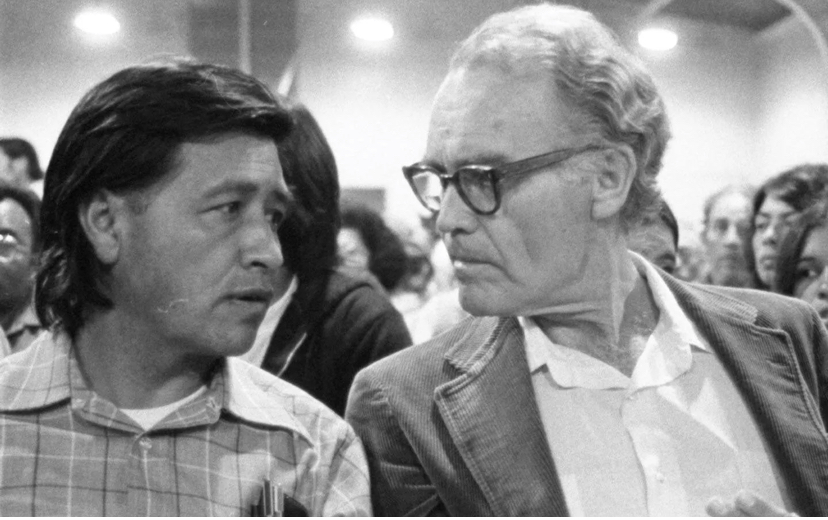
Cesar Chavez and Fred Ross Sr. knew it would take a movement to fight measures aimed at intimidating Latino voters. So they built one.

By Paul Chavez and Fred Ross Jr.
published by The Nation Magazine on June 23, 2021

Why did President Biden place Cesar Chavez’s bronze bust in the Oval Office on Inauguration Day—27 years after his passing? Why did 17 million Americans support his boycott of California table grapes in 1975? Is it because the genesis of Chavez’s activism was community organizing and voter engagement? He was a civil rights leader before becoming a farm worker leader, and he embraced a transformational vision of trade unionism. With Republican lawmakers in many red states enacting laws to thwart voting by people of color, this is a good time to examine Chavez’s roots.

Chavez’s journey to the White House began at age 25 when he met Fred Ross Sr., one of America’s great community organizers.

“The first time I met Fred Ross, he was about the last person I wanted to see,” Chavez said, eulogizing Ross in 1992. Ross came to the rough East San Jose barrio of Sal Si Puedes (Get Out If You Can) in spring 1952, organizing a chapter of the Community Service Organization after forming the mother chapter in East Los Angeles. Chavez had recently left the fields. He initially thought Ross was a college professor down from Berkeley or Stanford to study Mexicans and ask insulting questions.

So during a “house meeting” hosted for Ross in his home’s packed living room, Chavez planned to “get even” by having some tough young buddies scare him away. Then Ross started talking about empowerment through the ballot box—and changed Chavez’s life. Ross wrote in his diary, “I think I’ve found the guy I’m looking for.”

Over a frenetic 40 days and nights Chavez helped the CSO to register 4,000 voters. On Election Day, the county Republican Party sent “challengers” to intimidate first-time Latino voters—reminiscent of the voter suppression civil rights activists resist in the South today. The strategy backfired. One Latino voter said, “At first I got really mad, but then thought if they go to all that trouble to keep us from voting, it means they are paying attention to us.”

When so many Latinos voted, county officials ordered packinghouses to stop dumping waste into barrio creeks, and fixed cesspools that had been causing amoebic dysentery.

Ross hired Chavez as a full-time organizer. Together, Ross and Chavez created 22 CSO chapters throughout California that signed up more than 500,000 voters and helped 50,000 legal residents become citizens. Leaders developed such as Edward Roybal, Herman Gallegos, Cruz Reynoso and countless others. CSO battled voter suppression, police brutality, job discrimination and school segregation. It formed a diverse coalition of Latinos, African Americans, Jews, Catholics, Japanese Americans, and labor leaders.

Chavez and Ross directed registration of 160,000 Latinos and turned out voters in the 1960 John Kennedy presidential race, winning praise from John and Robert Kennedy, who met with Chavez.

After his 25-day fast for nonviolence in 1968, Chavez asked Ross to mount a statewide registration and voter turnout drive for Robert Kennedy’s presidential campaign. United Farm Workers organizers and grape strikers joined veteran CSO activists in East LA. “Bird dogs” went door-to-door ahead of deputy registrars marking sidewalks with chalk in front of homes with unregistered voters. In 20 days, they registered 11,000 new voters just in the Eastside.

Chavez traveled the state stumping for Kennedy. John Lewis recalled spending the final weeks before the June primary accompanying Chavez “deep into some of the poorest neighborhoods in Los Angeles, both Latino and African American. We met and talked with countless people—one by one or assembled at rallies.” High turnout in Latino and Black precincts brought Kennedy victory before he was shot at the Ambassador Hotel.

Ross taught Chavez that organizing is about listening to people, engaging them on issues they care about, and spurring them to collective action. CSO became the biggest, most influential California Latino civil rights group of the 1950s and early ’60s. “CSO was the best and most effective grass roots organization to which I have belonged,” affirmed Cruz Reynoso, later the first Latino California Supreme Court justice.

“You can’t do anything by talking,” Chavez observed. “You can’t do anything if you haven’t got the power…. And the only way you can generate power is by doing a lot of work.”

Fulfilling his dream of organizing farm workers in 1962, and with Ross’s help, Chavez—joined by Dolores Huerta and Gilbert Padilla—used the community organizing principles they learned in CSO to build the UFW. They knew only a union could address abuses in the fields. But they also believed it would take more than a union to overcome the crippling dilemmas field workers faced upon returning to their communities; it would take a movement.

The same voter suppression CSO fought in the ’50s is now experiencing a resurgence. So passing HR 1, the For the People Act, and then organizing to turn out voters would be the truest tribute to Cesar Chavez, John Lewis, and Fred Ross.


Paul Chavez is president of the Cesar Chavez Foundation, which keeps his father’s legacy alive through its affordable housing, educational radio, and academic tutoring endeavors.

Fred Ross Jr.Fred Ross Jr. is a veteran labor, community and political organizer who was trained and mentored by Cesar Chavez, Dolores Huerta, and his father, Fred Ross Sr.

post-thumb

Cesar Chavez Foundation hosts Covid-19 vaccine event at its affordable housing community in Fresno

June 21, 2021, by CCF

The Foundation will partner with the UFW Foundation to provide vaccines to community

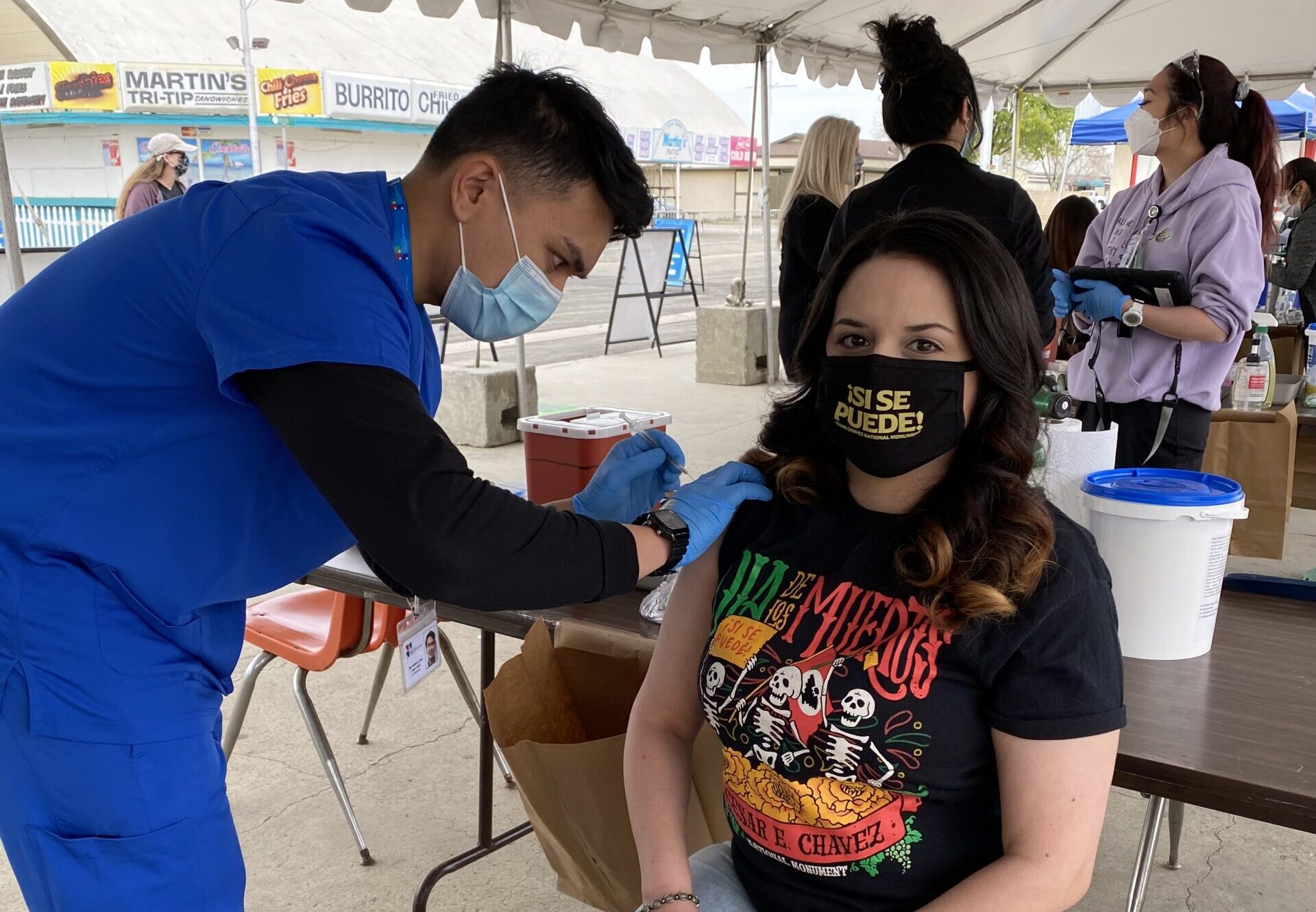
Fresno, Calif. (June 21, 2021) – The Cesar Chavez Foundation (CCF), in partnership with the UFW Foundation, will host a vaccine clinic at its newest affordable housing community in Fresno on June 22 from 12 p.m. to 7 p.m. The event will take place at Las Palmas de Sal Gonzales and vaccines will be available to members of the community at no cost with no appointment required.

“The Cesar Chavez Foundation is looking forward to once again partnering with the UFW Foundation to host a vaccine event at our newest affordable housing community in Fresno,” said Paul Chavez, President of the Cesar Chavez Foundation. “The Foundation is dedicated to working with its partners to ensure that as many people as possible have access to vaccines, particularly the most vulnerable in our communities.”

The Cesar Chavez Foundation has hosted dozens of vaccine events at its properties in California and Arizona. As a result of CCF’s efforts, thousands of people have been vaccinated. The Foundation will continue to partner with the UFW Foundation throughout the summer to provide vaccines to communities across California.

CCF previously partnered with the UFW Foundation and the UFW to vaccinate thousands of farm workers in March and April at the historic 40 Acres in Delano, Calif., which is owned and managed by the Cesar Chavez Foundation.

Where: Las Palmas de Sal Gonzales, Sr. – 5070 East Kings Canyon Road Fresno, CA 93727

When:  June 22 from 12 p.m. to 7 p.m.

post-thumb

A Statement from the Cesar Chavez Foundation

April 22, 2021, by CCF

Over the past year, incidents of racial injustice including the murder of George Floyd and countless others have left many saddened, frustrated and oftentimes feeling hopeless. While this guilty verdict will not bring back George Floyd’s life, we hope it sets a precedent of accountability that is a step towards a more just society. There is much work that still needs to be done to ensure an equitable society for all regardless of race, color or creed. Racism has no place in this country and the Cesar Chavez Foundation condemns the racist system that took George Floyd’s life. We offer our deepest condolences to the Floyd family.

post-thumb

National Fair Housing Month: An Interview with Chief Operating Officer Manuel Bernal

April 21, 2021, by CCF

In honor of National Fair Housing Month, we sat down with Chavez Foundation’s Chief Operating Officer Manuel Bernal to learn more about the Chavez Foundation’s role in access to fair and affordable housing.

What is fair housing?

It is illegal to discriminate in the sale or rental of housing, including against individuals seeking a mortgage or housing assistance, or in other housing-related activities. The Fair Housing Act prohibits this discrimination because of race, color, national origin, religion, sex, familial status, and disability.

How are fair housing and affordable housing interconnected? 

The Fair Housing Act applies to everyone, market rate and affordable housing. However, because public funds—at various levels of government—drive the development of affordable housing, the scrutiny placed on affordable housing developers and operators tends to be much more stringent; and tenants have many more sympathetic avenues to listen to their concerns.  In fact, a substantial function for all affordable housing developers and operators is “Compliance.”   While the Compliance function has many sub-functions, a prominent sub-function is compliance to local, state and Federal Fair Housing laws.

How does affordable housing help to strengthen families and communities?

The driving concept behind affordable housing is that for some families the market costs of renting or owning their shelter exceeds their ability to pay—usually taking 33% of their income; an affordability gap exists.  Affordable housing fills that gap by either providing rental or ownership subsidies, or reducing the production and/or operating costs so that families can afford the shelter.  By filling the affordability gap, in various ways, affordable housing strengthens families by (1) not having to have multiple jobs to afford the rent or mortgage, thus increasing family time, (2) allowing them to redirect their remaining resources to other essential items like food and healthcare and (3) allowing them to save money to invest in themselves—like education for themselves and their children, purchasing a home, opening up a business, etc.  

Affordable housing not only strengthens families but strengthens communities as well. Affordable housing fosters diversity in communities by allowing families to live where otherwise they would not be able to afford.  In turn, diversity fosters understanding among people that otherwise would not interact.   Also, affordable housing is an economic development tool for communities.  It brings tax revenue and disposable income spending.  Finally, affordable housing is a long-term asset for communities.  Affordable housing will positively impact communities for the useful life of the development, which tends to be at least 50 years.

What are some long-term solutions to fair and affordable housing?

Fair Housing is an on-going battle against discriminatory practices by those who control housing finance, development and operations. When people’s mindsets are at play, it is hard to imagine that, at a practical level, Fair Housing for all will ever be achieved.  You cannot put a number to that.  Which only means that we as a society must find the means, energy and tools to continue this on-going battle.  

Similarly, resolving affordable housing seems equally daunting.  But since the affordable housing problem is primarily a numbers game (e.g. the gap between the cost of housing and what people can afford to pay), and not a mindset change, at least in theory affordable housing seems easier to solve.  Resources would have to be invested in reducing the cost of housing AND increasing the incomes of families.  You can put a number to that.

What happens when communities don’t have access to fair and affordable housing?

Housing is a basic need.  When adequate housing is not available, the ills that plague societies manifest themselves in varying degrees.  Just look around to identify our socials ills, and many can be traced to the lack of affordable housing.

When thinking of solutions to fair and affordable housing, what role does the Chavez Foundation play?

Housing discrimination and the lack of affordable housing have become gigantic and complex problems.  While it is impossible for CCF to solve these problems on our own, we can make contributions.  Our Housing and Economic Development team have been entrusted with leveraging $5 billion for underserved communities over the next 7 years.  That investment will create thousands of affordable housing units, and thus make a substantial contribution to the supply of affordable housing in this country.  In addition, CCF is committed to operating its affordable housing portfolio through its property management team.  This will ensure consistent compliance on all our units for all our families to all local, state and Federal fair housing laws.  

How does housing inequality connect to Cesar’s legacy?

Fair and affordable housing have a strong connection to Cesar’s legacy.  Fair and affordable housing speaks to:  addressing a basic human need; treating people with respect and dignity, leveling the playing field and giving families a chance at success;  addressing the larger needs of families, in addition to workplace needs; helping communities thrive.

The Cesar Chavez Foundation builds and manages quality, affordable, multi-generational housing with amenities including Si Se Puede Learning Centers and Si Se Puede Senior Centers. Click here to learn more about the Chavez Foundation’s Housing and Economic Development Fund.

Manuel Bernal, President

Manuel Bernal’s nearly 30-year career in community development began as a Management Analyst for the City of Los Angeles Housing Department underwriting loans with HOME and CDBG funds. He later served as an Underwriter of equity investments at the National Equity Fund and was a co-founder and first Executive Director of the East L.A. Community Corporation. Manuel first joined the Chavez Foundation in 1999 and served until 2011 as Executive Vice President for Housing and Economic Development, and served on Chavez Foundations Board of Directors from 2011 to 2017. Prior to his current position, Manuel was the Director of Multi-family Housing for the City of Los Angeles.


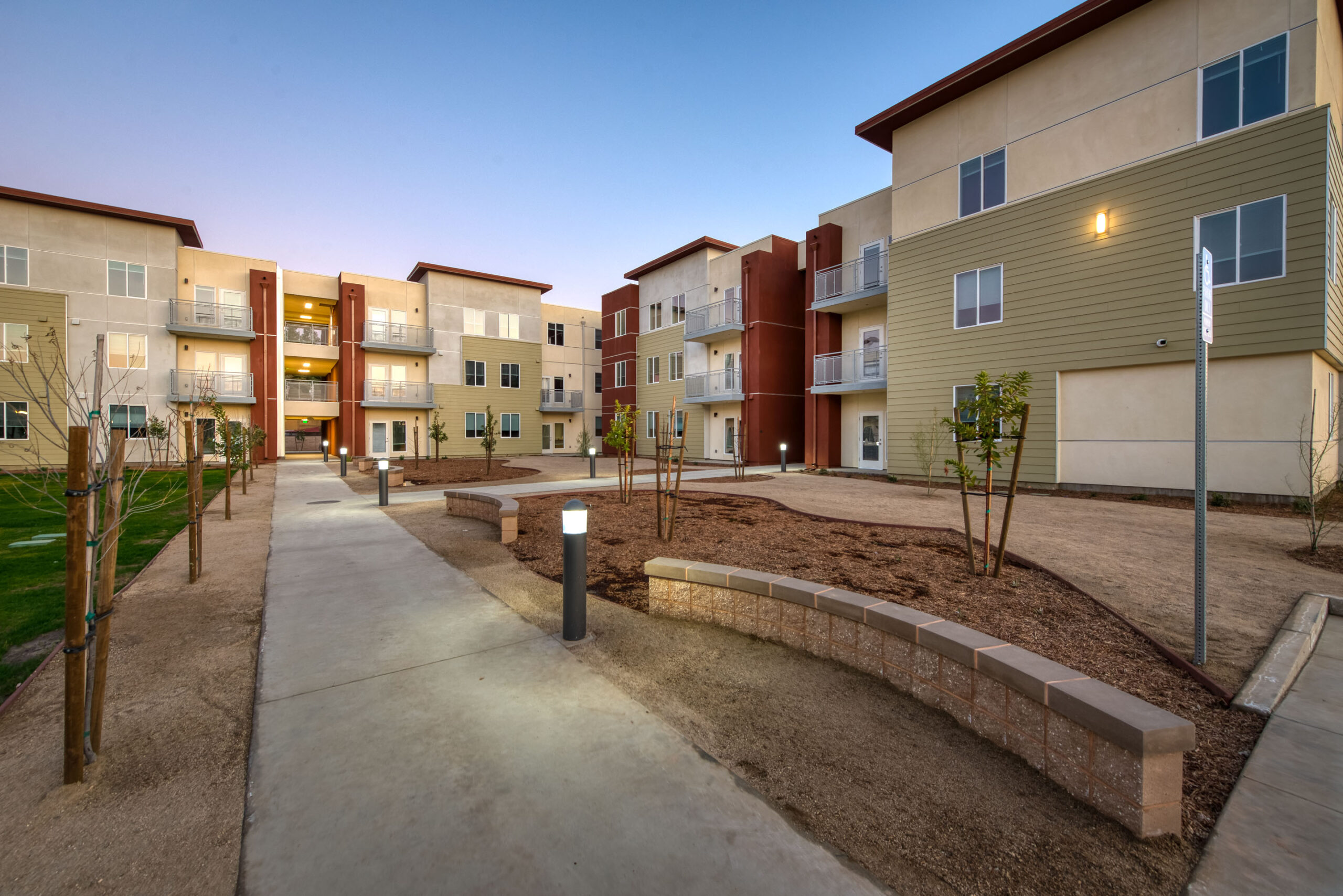
Image: Las Palmas de Sal Gonzales, the Housing and Economic Development Fund’s newest energy-efficient property for low-income families and seniors in Fresno, Calif.

post-thumb

First Lady visits Forty Acres on Cesar Chavez’s birthday

April 6, 2021, by CCF

Dr. Jill Biden honoring a man who spent his life serving others as 1,000s of farm workers are vaccinated where the union began in Delano—250 more workers getting shots on Cesar Chavez’s March 31 birthday

Delano, Calif.—Dr. Jill Biden honors a man who dedicated his life to serving others by spending Cesar Chavez’s birthday, Wednesday, March 31, at the historic “Forty Acres” property where the union began outside Delano and where thousands of farm workers are being vaccinated against COVID-19. Dr. Biden will participate as another 250 workers get vaccinated on Wednesday. Vaccination clinics there have administered about 1,100 shots each weekend over the previous three weeks in March through a partnership between the Cesar Chavez Foundation (which owns and manages the Forty Acres), United Farm Workers, UFW Foundation, Kern County Latino COVID-19 Task Force, Kern County and Kern Medical Center.

The Chavez foundation’s network of Spanish- and English-language radio stations has encouraged farm workers to call the bilingual toll free call centers of UFW Foundation and the Latino COVID-19 task force for appointments to get their shots. They are administered at the Forty Acres by staff from Kern Medical Center that handles check-in and administration.

Vaccinations are open to all farm workers 18 years and older at no charge and regardless of immigration status. No health insurance or doctor’s order is required.

The First Lady will be greeted and meet at the Forty Acres with farm worker movement leaders, farm workers, Chavez family members and staff and volunteers who have been organizing the vaccinations throughout the month of March.

Agricultural workers have turned to the Forty Acres with their problems since the 1960s. The 40-acre grounds include the spacious Reuther Hall where medical personnel set up shop. Workers and other Latinos have regularly visited the Forty Acres during the pandemic for distribution of large quantities of emergency food and face masks.

An adobe-brick former co-op service station at the entrance to the complex is where Cesar Chavez fasted for 25 days to rededicate the UFW to nonviolence and where he was joined by Senator Robert F. Kennedy when the fast ended on March 10, 1968. “It is my deepest belief that only by giving our lives do we find life,” Chavez said in a statement read for him because he was so weak.

Dr. Biden will visit that structure, which includes a large storeroom displaying photos of the 1965-1970 Delano grape strike and the small restored room where Chavez fasted in 1968. The Forty Acres was dedicated as a National Historic Landmark by the National Park Service in 2008.

Dr. Biden will also meet with farm workers. Farm labor issues have evolved over time, but today coalesce around the UFW- and UFW Foundation-sponsored Farm Workforce Modernization Act letting immigrant field laborers earn legal status and a path to citizenship by continuing to work in agriculture, which President Biden strongly backs.

“Just as farm worker issues have evolved through the years—and our movement with them—it is powerful to see historic sites such as Forty Acres evolving with new purposes,” said United Farm Workers President Teresa Romero. “It’s also heartening when people in positions of power take the time to meet with and understand farm workers and the barriers they face. Most urgent for them now is immigration justice and the path forward with the Farm Workforce Modernization Act.”

“We are honored by First Lady Dr. Jill Biden’s visit to the Cesar Chavez Day vaccination event in Delano,” said UFW Foundation Executive Director Diana Tellefson Torres. “Farm workers have put their lives at risk during the pandemic to feed this nation and they want protection from COVID-19. Through partnerships like the one at the Forty Acres, we’ve been able to provide thousands of farm workers access to vaccines. We will continue to work with the Biden Administration to ensure that life-saving vaccines reach farm workers throughout the country.” 

“For us, the Forty Acres is sacred ground,” said Cesar Chavez Foundation President Paul F. Chavez. “It was the first permanent home for our movement and where my father fasted for 25 days in 1968, calling on all of us to dedicate ourselves to serving others. So what better way to keep my dad’s legacy alive today than by vaccinating farm workers here at the Forty Acres? What more fitting way for Dr. Biden to honor him than by taking part in helping protect farm workers who have suffered so disproportionately from COVID-19?”

Some 63 miles away, southeast of Bakersfield at the Tehachapi Mountain town of Keene, is the Cesar E. Chavez National Monument where Chavez lived and labored his last quarter century, and where he is buried with his wife, Helen. It is the 398th unit of the National Park Service and administered in partnership by the park service and the National Chavez Center, part of the Cesar Chavez Foundation.

Posts pagination

Previous page 1 … 14 15 16 … 21 Next page
Press Inquiries:

Suzy Silvestre

Director of Strategic Communications

ssilvestre@chavezfoundation.org


Marc Grossman

Spokesperson

mgrossman@chavezfoundation.org

Recent Posts
  • Transforming Lives with Chris Hartmire Plaza in Pomona
  • We Are Winning When Our Stories Take the Stage
  • Chavez Foundation Celebrates Opening of Chris Hartmire Plaza in Pomona, Calif.
  • We Are Winning: A Revolution of Mind + Heart
  • Free Sample Lessons for K-8 Curriculum
Cesar Chavez Foundation
.

Important Links

  • What We Do
  • Who We Are
  • News
  • Contact

Contact Us

P.O. Box 310
29700 Woodford-Tehachapi Rd.
Keene, CA 93531

contact us

Newsletter Subscription

    © Copyright Cesar Chavez Foundation 2024. All Rights Reserved.

    site design and site maintenance by Dream Warrior Group